Wednesday, 25 May 2011

"What I need is someone who's going to be in my bed at 2 a.m. who I don't have to lie to or eat breakfast with"

Mills & Boon Modern Romance attempts to assimilate the old-fashioned joy of falling in love into this contemporary world, offering second-hand joy to readers whose understanding of romance has been warped slightly by living in a world devoid of old-fashioned romance. Mills & Boon are escapist fantasies, offering fairy-tale scenarios through a rose-tinted view of our social landscape with the smooth veneer of nostalgia. Recently, the publishing monolith has aspired for modernity beyond stamping their novels with the word Modern. Spice has upped the sexual quota to a hedonistic-degree that trendy, urban types will immediately recognise. Paranormal hopes to cash in on the ludicrous success of Twilight, The Vampire Diaries and The Next Big Thing because part of the future is sanitising out-dated horror staples. Will these young, go-getters of love check potential dates on Facebook, update the progress of their relationships via Twitter, watch Blu-Rays together and do other things that are all the rage among twenty and thirty-somethings nowadays?

One can only hope to never find out. Of course, there is one romantic phenomenon that those who are out-of-touch, but still running large entertainment conglomerates, are beginning to recognise and that is the always thrilling-to-watch-from-the-outside trend of friends with benefits, or 'physical coupling buddies'. Soon there will be a few television series about it, there have already been films and there will be a few more, and if they haven't already, soon enough Harlequin will catch up, because they have their finger on the pulse of young people's wrists even more solidly than we Bewildered Hearts. What is a friend who offers other benefits besides friendship, however? Should we look it up on the Urban Dictionary so we don't appear uncool? Do the kids still say 'cool'? No, let's get our information from the usually reliable and insightful source of a glossy Hollywood romantic comedy? That's where we learnt so much about Valentine's Day, and Evita.

No Strings Attached tells the story of a serial romantic, Adam, played by Ashton Kutcher's mop of hair, who falls for a hard-working trainee-doctor, Emma (Natalie Portman's remaining integrity), over the course of a series of unlikely coincidences. Adam is troubled due to his ex-girlfriend beginning a relationship with his own father, while Emma is incapable of emotion, brittle and so dedicated to her work she has neither the time nor the interest for loving. The film manages to hint that she is also emotionally-healthy, suitably ambitious and willing to sleep her way to the top of her profession, alienating friends and colleagues all the while, although some of this is only barely hinted at because Adam is supposedly our protagonist, despite the film's incompetent story-telling. While Adam is our lead, the demands of the plot rest on Emma's arc from becoming a girl without a boyfriend to being a girl with a boyfriend. Before she can complete this transition, though, there is the complicated matter of filling out a running time and dick jokes can only go so far.

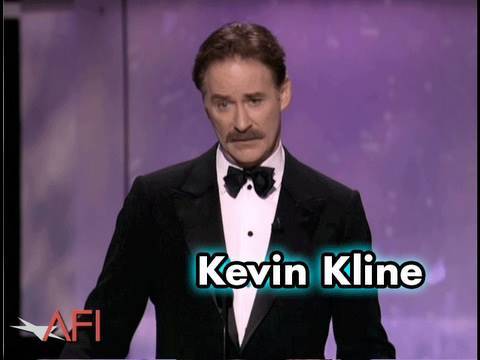
Emma has the bright idea of sleeping with Adam in a number of different locations, but refuses to become emotionally-involved for reasons that are never adequately explained. Adam, meanwhile, remains exactly the same for the entirety of the movie. No Strings Attached has all the hallmarks of a hip, young-people film, including a twenty-something screenwriter, Natalie Portman as both star and executive producer, the presence of Ashton Kutcher, a veritable who's who of up and coming actors (Olivia Thirlby, Ophelia Lovibond, Greta Gerwig, Kevin Kline), an uninhabited homosexual character, a black friend character played by a rapper, a sixty-four-year-old director and a blink-and-you'll-miss-it cameo appearance by Tim Matheson. Characters have iPhones regardless of their material wealth, make inappropriate jokes about genitalia, fetishise contrived lesbianism and somehow force in references to Glee, all the while relying on romantic comedy clichés such as strained parental ties and siblings getting married to reinforce a desire for a similarly committed bond.

Every effort is made to update No Strings Attached as a modern romcom, but on their first date Adam takes Emma to a miniature golf course and then to an all-night diner where they innocently squabble over a shared milkshake. Once the predictable end to the formula comes the viewer is left to wonder whether the conservative attitudes were intentional. No matter how much the youth attempt to avoid traditional relationships with their ironic emotional distance, casual sex and devotion to their careers deep down everyone craves the same thing, and that is what their parents where unable to achieve, a happy-ever-after and a kiss atop a fountain while an elf plays the violin. We are all slaves to our sex-specific mating interests and even Hollywood's continued delusion towards glorifying individualism and the free-spirited pursuit of dandyism can break us from the conclusion that humans are simple animals who like babies, houses and Ashton Kutcher movies.

Be that as it has been scientifically-proven to be, No Strings Attached remains responsible for its inept fumbling of narrative, characters and comedy. Evolution cannot be blamed for everything. Adam and Emma are smug, instantly-detestable, hard to warm to and face no difficulties in their idealised versions of life. For the film to work with Adam as its hero and the love story told through his mentality, the world of the film would have needed to have been heightened with a satirical play on gender roles. Adam is the feminine male, the romantic, betrayed by broken entanglements yet still relentlessly optimistic. His long-time goals are marriage and family and he is honest in the validity of these dreams. Emma, meanwhile, takes on the masculine form as Adam's emotional counter-point, refusing connection beyond the physical, commitment-phobic and rejecting the social norms that dictate love shall bring stability and happiness.

However, because of the realism of the characters' rooting there is never a satisfactory excuse given for Emma's inability to accept feelings. Her sister and mother are healthy, her father is never mentioned. She is self-assured, funny, smart and grounded. Therefore, Adam, the hero, must work even harder to convince Emma to reject her principles, prove that work and relationships can be combined and also manage to solve the deep-rooted cause of her emotional frigidity, with hilarious results. Still, to shirk on laughs is forgivable if the film's inclination is for conceptual credibility, but with neither you have a romantic comedy that is not romantic, comedic or believable.

The other option, and clearly the one the filmmakers decided to follow two-thirds into their picture, is to make Emma the heroine having to re-evaluate her ambitions when a friend with benefits turns into what a friend with benefits is, someone you like who you have sex with. Consistently throughout the film supporting characters and strangers walking their dog in the middle of the night tell Adam that such a scenario is unworkable in the long-term, but this is surely no revelation as the system is designed to be transitory and functional. Inevitably, thanks to the central conceit being short-sighted and misunderstood by the writer, there is no drama to the concept, no mystery and no insight. This leaves us with nothing more than a pathetic attempt to repackage When Harry Met Sally... without the wit, iconic scenes, depth or Billy Crystal. Critics have argued the film is feminist, as did the director, but if this were the case Emma would have been the protagonist and all the obstacles the central romance faced would not have stemmed from her independence masquerading as psychological problems which are then cured by a penis.

As the story actually goes, Adam meets the girl of his dreams only to discover girls are weird! However, because of his manhood and sturdy torso she stops being weird and starts crying and speaking sentimentally. With Emma as the film's centre there would be greater nuance and a more compelling protagonist. We also might have had what the writer originally intended, less of a generic, broad romantic comedy, and more of an insular exploration of the troubles facing modern women trying to juggle the professional with the personal, with evolutionary conditioning drilling maternal instincts into their pretty, little brains. Does such a sexual agreement between colleagues afford the ideal situation for determined career types, and furthermore is that an interesting scenario for a feature film? We shall have to wait and see, for No Strings Attached sets out to do all kinds of things and ends up only doing one, being a terrible feature film, two hours of Ashton Kutcher attempting to convey bafflement with his lips.

Would a Mills & Boon author aspire to tell the tale of two friends who start having sex only to continue to have sex? Presumably we can discount this as a classically-structured romance for a number of obvious reasons. Still, we have reviewed books on this very site where friends become lovers, eventually, after endlessly discussing whether increased intimacy might destroy the bonds of friendship. The stakes are never high enough and the journey is no challenge. The casual attitudes of the characters towards sex, fidelity and commitment mean that the mighty struggle to come to terms with what they risk lacks significance. No Strings Attached would have worked much more strongly had Emma lost Adam at the finale, with her coming to a realisation about priorities against a more credible backdrop of responsibilities and incitement. Of course, had that been so the film would not have been considered a romance and therefore Bewildered Heart would have been saved from having to watch it.

Sunday, 15 May 2011

"A shyness came between them, a shyness that stirred expectantly, like a tree whispering in the wind"

There was more to The Texas Billionaire's Pregnant Bride: An Evolutionary Interpretation of Romance Fiction Titles than a few tables of statistics suggesting women like babies, commitment, money and men from the rural southern states of America, although the majority of the paper did seem devoted to suggesting that. Amongst all the data and well-educated conclusive opinions hid a few paragraphs that attempted to make sense of the grandest question of all, the conundrum that has riddled generations for generations. Why do our collective female population keep buying these terrible books and is the answer more complicated than that many women buy romance novels for the same reason that many men watch Zack Synder movies? Simply put, the human species is really lousy and we are all doomed.

Not so, say Anthony Cox and Maryanne Fisher, or, more likely, not just that. On page two of their paper they enter into the nitty gritty of examining the inexplicably enduring success of the genre. They quote Deborah Camp, from Rita Gallagher and Rita Clay Estrada's Writing Romances: A Handbook by the Romance Writers of America, to help point out that said novels help to satisfy an 'insatiable appetite for love in all its guises.' Not all of its guises, of course, merely the most idealised, joyous and treasured kind of eternal love that knows only easily-surmountable, amateurishly-contrived obstacles, and only love as it is first discovered to then flourish most brightly against all the odds between very beautiful people in a series of expensive and exotic locations. 'Past analyses of romance novels have extensively relied upon socio-cultural interpretations. For example, Camp writes, '(The) stories appeal to females because they teach lessons of nurturing, of aspiring, of following your heart, and of finding success.''

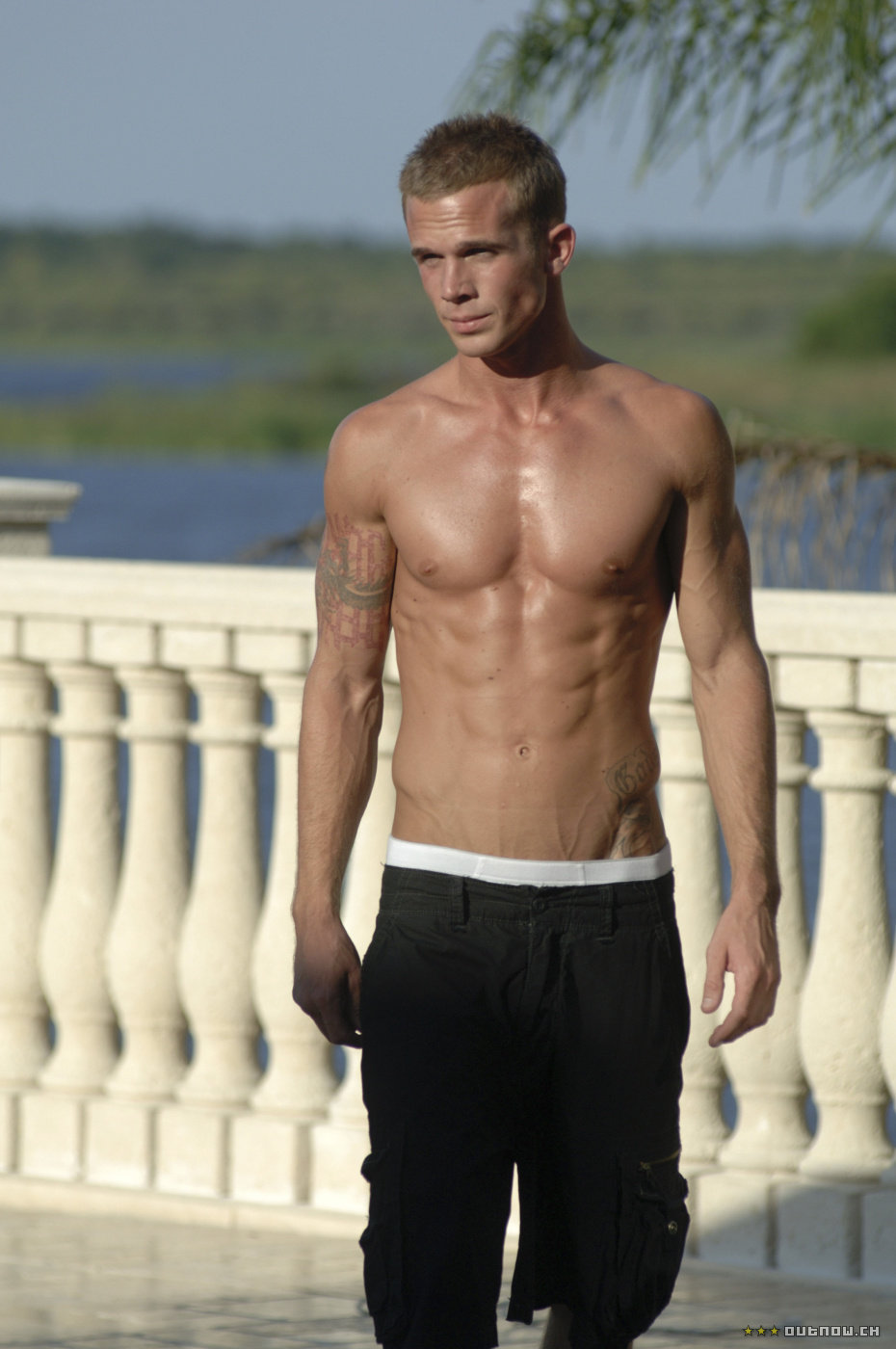
This is correct, but the attribution is over-simplified. Stories with female protagonists learning, daring to dream and being rewarded for enterprising behaviour are not exclusive to the romance genre, albeit a heroine's tale usually revolves around sex-specific mating interests and therefore will invariably concern love and reproduction. Yet how about those age-old tales of small-town girls heading to the big city with dreams of a career in the lucrative, empowering business of dance or musical theatre, where they inevitably struggle against mean-spirited, bitchy rivals and only find support in the cultivating arms of an attractive male, usually portrayed on film by Cam Gigandet's torso? Speaking of patriarchal interpretations to further denigrate feminist principles that women can be more than mothers, nightclub dancers and wives, there's also this. 'Feminist scholars such as Germaine Greer propose that the stories reflect women’s acceptance of their “chains of bondage” to patriarchy rather than their true selves. Likewise, Brownmiller, when talking about the occurrence of sex in romance novels, states, “the fantasies are usually the product of male conditioning” rather than an accurate reflection of women’s true desires. Modelski contends that the books provide an “outlet for female resentment” whereby heroines rebel against male authority figures.'

Bewildered Heart has sensibly steered clear of this debate for fear of revealing an embarrassing misconstruction of feminism. More importantly, however, we don't wish to guide the weblog away from its original intention of making fun of romance novels. Nevertheless, such subject matter can only be ignored for so long until accusations of misogyny or stupidity are heard from the many readers of the site. The central argument of The Texas Billionaire's Pregnant Bride is that the novel titles accurately reflect women's true desires, and as the majority of the authors are women either they are held down by these chains of bondage (Surely only in Mills & Boon Spice!) and are not manifestly free from male oppression or these stories are female fantasies and should be merited as proof of psychological evolution or dismissed as unadulterated fairy-tales that should not be taken seriously. As those who believe in evolution can attest to current human philosophies of life and aspiration represent our true selves and only the dismantling of romance literature, entertainment, magazines and centuries of religion, capitalism, and whatever else is happening out there, will bring about definitive change to thought processes and stop women from aspiring towards what they already aspire to.

Are Mills & Boon authors holding humanity back with out-dated fantasies entirely constructed around the desires of males, and if so, why are all men written as commitment-phobic and chivalrous for the initial one hundred and eighty pages? Is the alternative more likely, that the authors are merely feeding into the hopes that already exist and that a gorgeous, wealthy, sturdy, physically-immaculate man with dark, enigmatic eyes, ridiculously long, thick eyelashes and no visible signs of pattern balding is the evolutionary goal for every woman, and as the basis for a genre of fiction is more offensive to the emasculated male of the species unaware of these books than the ladies who read them, foolish and misguided enough to form any unrealistic expectations from their titles, covers or contents?

Besides this, 'These interpretations do not satisfactorily explain why romance novels, and Harlequins in particular, have remained so incredibly popular across time and cultures.' Too right, Cox and Fisher. The Feminists are free to their righteous intolerance, but frankly they are not helping to answer the initial proposition. 'An alternative explanation is that these novels are consistently addressing topics that have universal appeal to women. Evolutionary psychology offers insight into human universals, and suggests that women and men have sex-specific mating dilemmas.' We couldn't have put it better ourselves. Perhaps male conditioning can be interpreted as human nature and we, as people, are naturally predisposed to procreate to further our family trees. Harlequin and Mills & Boon take this evolutionary impulse, slap a seductive title and photograph on the cover and call it pure reading pleasure. Likewise, we have even evolved to finding a sense of humour and a picturesque, though nonsensical, green map background attractive so even bitter and unwanted websites are able to sow their seeds through links.

'Across cultures, women tend to be the primary caregivers. Furthermore, women have notably lower limits on the number of children that they can have, as compared to men. These differences have led evolutionary psychologists to propose that women tend to seek commitment from their mates, and prefer mates who have a propensity to accrue resources since they will need these resources while they tend to the children. Therefore, we propose that a better interpretation for the success of Harlequin romance novels is that the books are addressing women’s sex-specific, evolved, mating interests,' explain Cox and Fisher, although they cannot specifically argue that the romance publishers, or their readers, are overtly aware of this. In truth, it matters not, because evolution has defined our idea of a happy ending and despite this doing little to explain what words men look for in book titles, it does at least help us resolve that nagging issue of why women read Mills & Boon by the truckload, and that's because they are evolutionarily predisposed to do so for the benefit of humankind. Therefore, to malign the genre, and the weblogs that have resulted from its existence, and to call for its end, is not only feather-brained it is practically apocalyptic.

Monday, 9 May 2011

"Men could be hired anywhere at any time... for only a few dollars a month”

One of the many troubling aspects of writing a weblog concerning romance fiction, besides the continuing prospect of having to read and write about romance fiction, is the clear lack of positivistic analysis of psychology related to scientific studies at renowned universities. Worry not though, Bewildered Hearts, for all that is about to change thanks to The Texas Billionaire's Pregnant Bride: An Evolutionary Interpretation of Romance Fiction Titles. You read that correctly, dear reader. Apparently one Anthony Cox from the Centre for Psychology and Computing in Dartmouth, Canada and one Maryanne Fisher from the Department of Psychology in wherever St. Mary’s University is have teamed up to make sense of fifteen thousand and nineteen book titles published between 1949 and 2009 by Harlequin, North America's very own Mills & Boon.

So, how did Cox and Fisher decide to use this huge amassed amount of information and what did they hope this venture would prove? 'First, we identified the most frequently occurring words to determine the most prevalent issues addressed by titles. Second, we performed a qualitative analysis to identify the most popular, recurring themes that appear in the titles.' Hmm, that sounds like something someone might do to obtain grant money, but for those in the audience already bored by phrases such as 'qualitative analysis' is there a pithy sentence in the opening paragraph that might set out a conclusion so obvious it renders the entire research nugatory? 'Our results indicate that Harlequin romance novel titles are congruent with women’s sex-specific mating strategies, which is surmised to be the reason for their continued international success.' Bewildered Heart likes the sound of women's sex-specific mating strategies, but we can't help but wonder whether the world needs hard evidence to show that Harlequin and Mills & Boon are successful because they offer a product that deals with an element of life a large proportion of women think about.

Still, there are fifteen more pages of charts, tables and statistics to wade through, so enough questioning the time and cost that was wasted here, and let us examine the findings. Cox and Fisher break down this vast number of texts into Harlequin's own hilariously-titled sub-categories, such as Love-Inspired (Christian emphasis, inspired by love, no actual love), Super-Romance (Really good romance), NASCAR (Thanks to a clever marketing strategy to combine romance with NASCAR), American Romance (For patriots) and, of course, Flipside, which lasted three years before someone realised the name might be misconstrued as homosexual. To complicate matters further, our clever authors included the Silhouette Imprint and their own remarkably varied list of subgenres, which aren't nearly as silly-sounding as those of their sister company, so little wonder most are now defunct. With their database full to over-flowing with romantic words and their technical normalising work complete, the complex algorithms did their business and now the public can marvel at the surprising results. Do you think billionaire and sheik made the list of most used male occupations? How about disenchanted blogger?

With the paper outlining Harlequin's success, 5.8 billion books sold so far and counting, they go onto speculate explanations for why, and how. According to a study over at Parapublishing, a potential consumer will spend an average of eight seconds weighing up a book's appeal before buying it. As Oscar Dystel points out, in Mass Market Publishing: More Observations, Speculations and Provocations Harlequin do little to distinguish their 'uniform, homogenized, quality controlled' novels. Therefore, within these aforementioned eight seconds the potential reader forms an opinion based on the subtle differences between the books, which are the title, the author name and the photograph of a couple canoodling. Naturally, Harlequin are well aware of their target audience, and in fact, romance fiction publishers conduct more market research than any other publisher. They know what women want from their romance fiction and, for financial reasons, give it to them via implied semantic signifiers.

Therefore, when female consumers trawl through the shelves at a down-market bookshop for as long as we still have bookshops, and after that trawl through the Mills & Boon website, their eyes and opinions are immediately shaped by the title, and shortly thereafter the blurb. Yet we have learned that the blurbs lie and we have also learned that titles lie, so in one sense, the commercial draw of an enticing title is vital yet largely immaterial to plot and characters. As we have witnessed, the salacious aspect of Bewildered Heart's wanton desire for romance fiction means we search the library shelves for certain words. There is no logic in trying to pick a good one, so we pick the ones that offer our favourite clichés of the genre. Those include reclusive billionaires, emasculated former circus performers, brunettes, small business owners, Hugh Jackmen and ladies dressed in costumes of cartoon animals. Had Mills & Boon ever visited this internet treasure trove of useful information they would surely have published The Kinda Hugh Jackman-Looking Emasculated Former Circus Performer Billionaire's Brunette Wearing a Cartoon Animal Costume Mistress, Accidentally Pregnant!

The results substantiate what Cox and Fisher seemed intent on proving, that women's evolved sex-specific mating interests are consistent with the words found in Harlequin titles and the heroine's yearnings within its pages. The top twenty most popular words were Love, Bride, Baby, Man, Marriage, Heart, Secret, Wife, Doctor, Night, Christmas, Cowboy, Wedding, Child, Family, Texas, Nurse, Woman, Lady, and Husband. Danielle shall be delighted to note the absence of mistress from the list. So, Cox and Fisher argue, we can ascertain that what women want from their romance books are Texan cowboy doctors marrying and impregnating a nurse at night on Christmas, whilst one of them hides a secret family. Furthermore, says the paper, what women want from their romance fiction is what women want from life and this means the ideal characteristics of the perfect husband are decency, healing hands, a well-paid job (or cowboy) and a love of fidelity, Christmas, Texas, cooing at babies in supermarkets and different nouns for the same word.

Don't lose hope though, men who are unlikely to become doctors or cowboys, for Fisher and Cox have listed the twenty most frequently occurring professions in romance novels and they are as follows: Doctor, Cowboy, Nurse, Boss, Prince, Rancher, Knight, Surgeon, King, Bodyguard, Sheriff, Soldier, Lawman, Pirate, Secretary, Consultant, Midwife, Cattleman, CEO, Executive. It shouldn't take an academic to note that these careers fit into four categories. Medical: Doctor, Nurse, Surgeon, Midwife. Masculine: Cowboy, Rancher, Knight, Bodyguard, Sheriff, Soldier, Lawman, Pirate, Cattleman. Billionaire: Boss, Prince, King, CEO, Executive. Other: Secretary, Consultant. Secretary would depend largely on the inclusion of Boss, while Consultant is frankly the most confusing one, and that is on a list that includes Pirate. So, what straightforward conclusions can we gleam from these results? Cox and Fisher note, 'two primary themes: resource-based (e.g., doctors, surgeons, CEOs, kings) and athletic (e.g., cowboys, cattlemen). Perhaps related to the athletic theme is that of protectors (e.g., sheriffs, soldiers, lawmen) since these professions also require a high level of physical fitness. Therefore, our hypotheses concerning resources and physical fitness gained at least partial support, given the emphasis on these professions.' See, they glossed over Consultant and Pirate as well.

To round out the findings the authors define eight distinct themes, beginning with the most evident and ending with the afterthoughts: 1. Commitment, 2. Reproduction, 3. Western, 4. Resources, 5. Medical, 6. Christmas, 7.Royalty, and finally, 8. Professional. Now, this data is inevitably skewed by Harlequin's Medical and Western subgenres, and a world of lazily unimaginative writers. Despite this, the popularity of these books should not be overlooked. They should be looked at as indicative of the reader's sex-specific mating interests, and when done so doctors and cowboys are basically the same man, strong, nurturing, able, protective, passionate, land-owning, wearing funny outfits and using unorthodox methods of transportation.

With the irrefutable proof out of the way, the authors can move onto their wild and unreasoned conclusions. For example, 'The 20 most frequent words clearly suggest long-term commitment and reproduction are important to readers.' As other writers have pointed out, with far less research and intelligence to back them up, the romance genre is defined by a happy ending, and unlike life, a successful relationship involves having children and dying together. Therefore many of the words and themes that appear throughout the titles are a requirement of the form of story-telling. While no one should be surprised to see marriage and offspring hinted at by the book names, there were a handful of actual surprises. 'The word “attractive” appears only once in the database, and “handsome” only six times. Synonyms like “gorgeous” appear rarely (gorgeous appears three times), and the word “athletic” does not appear at all.'

What does this mean? As it turns out, nothing, 'It must be noted that there are only a few adjectives that describe the characters’ traits in the database. The majority of the words are nouns that identify the characters’ roles, such as bride, executive, or husband.' However, a quick glance at the contents of the book assuages any doubts regarding the physical attractiveness of the characters. It goes without saying that Texan billionaire doctors who own a ranch are rugged and gorgeous. However, Cox and Fisher are obviously dedicated to the subject of evolutionary psychology and whether or not Harlequin Enterprises entitle their books with a keen understanding of evolutionary psychology. They surmise, rather disappointingly, that such technical terms are interchangeable with common sense. Importantly, there is no way of proving how successful the books are, and whether a title such as The Texas Billionaire's Pregnant Bride would sell more or less copies than The Welsh Lorry Driver's Infertile Pen Pal, although common sense would surely prevail.

Due to these flaws and a seemingly tentative understanding of the genre, the study offers little valuable insights for a prospective romance writer, besides maybe dusting off those boots of yours and giving cowboys another spin. The focus of the article concerns itself with the sex-specific mating strategies of women, and only deal with the what, leaving the why tantalisingly vague. Why would a woman's ideal man be rich, caring, honest, loyal, virtuous, handsome, muscular, intelligent, kind, stable and also a doctor? Please don't just argue that evolution explains everything, because otherwise we are going to need a scientific analysis on what evolution is and then another one explaining why Texans don't believe in evolution.

Friday, 29 April 2011

"Regret, like a thief, crept into her heart, plundering her moralistic views about sex and love being entwined"

At Danielle's Book Thoughts, another weblog that occasionally reviews romance novels to further damage Bewildered Heart's aspirations for validity, Bedded at the Billionaire's Convenience receives a begrudging recommendation. Because last week the explanation of plot felt like proof enough of Cathy Williams' failings, our summing up of the novel has now been challenged by Danielle, and therefore a full and definitive analysis is called for, to end this controversy once and for all. So, Danielle, where do we begin?

‘The word 'mistress' needs to be struck from the vocabulary of the editors and the writers for this series of romance novels. It is so nineteenth century. And just a heads up here, a woman is not a man's mistress if he does not support her and she is not his beck and call, sexually or otherwise. Thus, this term does not apply to Georgie, whatsoever.’ So true, fellow anonymous literary critic, but there is one minor hindrance to your assertion, because nowhere in the novel does the term mistress appear, although much of said novel is instantly and thankfully forgettable, so who can say for sure? Anyone with a running history of reading Mills & Boon books, or Harlequin Presents as Danielle calls them, knows they shouldn’t begin with an in-depth critical analysis of the blurb, but here she goes.

‘I guess the person who writes the blurbs thought that us Harlequin Presents readers were so unenlightened that we wouldn't buy this book unless the blurb included 'mistress' in the description.’ Heaven forbid, not another unenlightened romance reader. Those are the ones holding the rest of us back. They’re the cursed reason we’re still reading at a nineteenth century level. Never mind that, though, Danielle, here at last is your forum to vent your dissatisfaction and put the romance world to rights. Mills & Boon respect and appreciate constructive criticism, so what’s a lesson? ‘Here's a lesson for you: I hate the mistress concept. When I get a Harlequin Presents in the mail or pick one up in the store, seeing this outdated, sexist term is a turnoff for me. I will read the book if I like the author and the story sounds interesting otherwise. But I would prefer never to read another book where the heroine is the hero's mistress. It offends my 21st century sexual egalitarianism principles.’

That was a clear misuse of the word lesson, but it is nonetheless a valuable insight. However, no one should blame Cathy Williams for the misguided and deceitful promotional material on the back-cover of Bedded at the Billionaire’s Convenience, but one question remains, Danielle? If you don’t appreciate the constant use of out-dated sexist terms in your reading material, then, dare we ask, why do you read these books? ‘Okay, you might ask why I read these books. Because they are good, and entertaining, and a nice way to spend a few hours, allowing me to recharge, relax, and let off some steam. Because they are fun to read, I am prepared to overlook some of the way un-PC aspects, most of the time.’

Comments such as these don’t necessarily fill one with confidence that the critic in question is the discerning, thoughtful type suitable for finding fault in trite romance fiction. However, as readers of Bewildered Heart will have figured out by now, what does Bewildered Heart know. Already it is apparent that Danielle is reading different novels to the ones we’ve been reading, because she describes them as ‘fun to read’ and ‘good’ and ‘entertaining’ and ‘a nice way’ and we have never used those descriptions on our weblog. Now our paths have finally crossed in the form of Cathy Williams’ Bedded at the Billionaire’s Convenience, so with our stalls forcibly set out as both disliking the sexist and incorrect blurb and having a general disdain towards misogyny, let’s get on with the review already.

‘I enjoyed this book. I liked the back and forth between Pierre and Georgie. I liked that Georgie wasn't beholden to Pierre or under his thumb. She had her own career and her own home, and was perfectly happy with her life in the country.’ Much of the book concerns itself with Pierre and Georgie’s ‘back and forth’, but such a personal opinion is largely invalid. The couple bicker as is standard for a romantic comedy, brought together via unlikely circumstance and then forced to remain face-by-face through irritating contrivance. Readers enjoy repartee, when such repartee is loaded with sexual tension and humour, but sadly Williams chooses to explore this through narration, leaving the bantering flat and repetitive. While this is a cliché of the genre there remains potential for success when dialogue is handled suitably. Danielle’s implication is either that this ‘back and forth’ is a clever twist on the form or that it is suitably-handled, and neither is the case.

Furthermore, one could argue, if one were so inclined, Georgie is beholden to Pierre. She is in love with him within fifty pages and aroused by him at their initial meeting. To complicate matters, once Pierre arrives in Devon to play out the charade for Didi, Georgie has no choice but to do his bidding, including sleeping in his bed, flirting with him and allowing some inappropriate breast-fondling in front of his easily-impressed mother. Despite this, Georgie was perfectly content with her house and life in the country with her chickens when the story began, but by the conclusion of the novel she has turned her back on all that for her billionaire husband, large house, pregnancy and quiet domesticity. Naturally, these comforts are preferable to living alone in Devon and having a poorly-paid career, but is this more or less compelling than a heroine only becoming happy once she has married? The strong, independent protagonist who is fine on her own is merely a necessity of the structure.

‘Pierre was the one who had some issues he needed to work out. He resented his family for squandering their money and he focused on making and keeping his money, and became more and more cold-hearted. Georgie brings a part of him to life, and he realizes how much he loves his mom, and enjoys being around her.’ We all know which part of him she brings to life and he then uses to show his mother love! Hey-oh! But yes, as with all Mills & Boon stories the interesting character is the hero, with the flaws and barely discernable character arc. In the case of Pierre, the women he has been cavorting with until Georgie wanders aimlessly into his life are an astute bunch of unfeeling, calculating career types. Danielle describes them as ‘colourless, snooty and boring’, but really, what are a few adjectives between indignant, judgemental people? Pierre must warm his heart, accept love, stop being so successful and accidentally impregnate a woman and in order to do this he is going to need a woman who warms hearts, gives love, has no ambition and allows men to have unprotected sex with her. Colourless, snooty, boring ladies with jobs just won’t stand for that behaviour and so step forward Georgie, girl of Pierre’s dreams.

‘Georgie and Pierre have good chemistry (although the love scenes are not fully described. Part of them would be shown, and part wouldn't. Which I thought was weird, but oh well.)’ If by ‘good chemistry’ Danielle means the author explains throughout the story that they are sexually-attracted to each other then that is a perceptive piece of criticism (as for the bracketed issues with the incomplete sex scenes she has a point. Where is the tame description of thrusting, the euphemisms for penis and vagina and the simultaneous orgasms that prove this couple are made for each other because they share a problem with premature climax so enamoured with the other as they are? That is all in there, Danielle, you pervert. What do you think this is, Modern Blaze! Spice! or Cosmopolitan Magazine? Because Bedded at the Billionaire’s Convenience is none of those, it states so clearly in the disclaimer on the opening page).

‘I was actually okay with Pierre to a certain extent, although I wished he hadn't kept his family at a distance, but I can't judge him for that.’ No, after all, that is the entire point of the book, and without this minor chink in the armour of his stellar characterisation then there wouldn’t have been a story at all. ‘He might be rich, but he didn't have much quality of life. I think spending time with Georgie and his mom helped him to realize what he was missing out on, but eventually that scared him. He made me mad when he sees a tender smile on Georgie's face and decides it's time to cut and run. I thought that was very cowardly of him, and low down.’ Cowardly and Low-Down would be a good title of a Cherish Romance, although it is doubtful Mills & Boon would use it. As for Pierre’s quality of life, that remains up to the reader’s opinion of Georgie. If you believe being a single billionaire with a string of attractive women at your beck and call shows a poor quality of life, and is bettered by being married to a woman such as Georgie and living in Winchester, then lucky you, for you are a fitting candidate for Mills & Boon reader.

Danielle ends her review with a sardonic eye movement at the indecisive tendencies of men everywhere before recommending the novel with a grade of four out of five stars. This glowing review prompts a re-evaluation of romance literature, because the target audience continues to not only absorb the steady stream of hopelessly-plotted stories, but then actually rate them highly as solid examples of the genre. What does the reader seek when settling down with Bedded at the Billionaire’s Convenience and how would they define descriptions such as ‘good’ and ‘entertaining’ and ‘fun to read’? When we, dear reader, set forth on our own entry into the romance canon we must bear in mind the analytical brain of our reader, and not attempt to sink to their depths, but challenge their expectations with something superior without prompting them to write a review in which we receive one or two stars out of five and a critical mauling their preferred novels regularly collect when scrutinized on this very page.

Thursday, 21 April 2011

"She fruitlessly pummelled his back with her fists and demanded to be put down immediately"

Somehow, after having read the opening three chapters of Bedded at the Billionaire's Convenience, the publishing team at Mills & Boon decided this was a book worth finishing. Largely because of their misjudgement then, Bewildered Heart has been forced to continue onwards. When we left the absurd contrivances and inexplicably protracted exposition that amounted to a narrative, Pierre Christoph Newman was headed to the Devon cottage of his ailing mother, Didi, to prove he and Georgie were in a committed relationship, even though they were not, to cheer Didi up and offer the flimsiest excuse yet for a romance novel. With such an opportunity and a lack of chivalry, Pierre has no intention of merely playing along with Georgie's lies. Oh no, Pierre wants to enjoy the full benefit of a method performance, and that means more than taking his fake girlfriend and real mother out to shop and eat at fancy restaurants. It also means forcing himself on Georgie, the woman he admittedly finds repulsive.

Still, who hasn't pretended to be in a relationship to enliven a fraught Christmas break with their senile, judgmental parents? With a premise so relatable and ripe for comedy and love, Cathy Williams eventually gets Bedded at the Billionaire's Convenience up and running, painfully stretching four sentences over ten chapters and one-hundred and eighty-five pages of inane banter, misogyny, the cod-philosophical musings of the benighted and hilarious descriptions of breast fondling. However, by the grand finale of a lifetime of happiness and accidental pregnancy the story is no longer as exhausting and infuriating as it was when it began, over coffee in a series of impressive locations. Fortunately, Williams has a love story to unfold, to obscure the tedium of the telling. Georgie and Pierre are at odds, but slowly their exasperated shouting turns to petty squabbling, evolving to ribald teasing and then into love and polite honesty. How was this achieved, the reader wonders, putting down the book and sighing again, no longer confused, but just passed caring?

Stuck at Didi's cottage from an unlikely snowstorm Georgie shares Pierre's bed to maintain the illusion of a healthy sex-life. Didi is nothing if not the modern mum, always pushing her son into having sex in front of her. However, Georgie feigns sleep as Pierre enters the room, having finished his important business via email and staring at his laptop quizzically. Georgie finds Pierre's amazing eyes, luscious eyelashes and sturdy torso of manly masculinity frankly irresistible, and Pierre is easily aroused by the fact that there's an of-age woman lying next to him, yet libidos cannot be satisfied. After all, they still loathe each other and sexual ecstasy would come at a high price, although the reader is never informed of that financial breakdown. The next morning some light kissing, heavy breathing and breast fondling is interrupted by Didi, always alert to her son's erections. Dismayed and perplexed beyond belief Georgie finds fault in her womanly desires and demands such a thing never happen again, possibly put off by Didi's roving gaze.

From then on it's a parade of awkward meals and Pierre's shameless flirting, coupled with illicit rendezvouses in bedrooms where Pierre grins and leans in doorways, while Georgie hides her decency and spurns his advances. Pierre calls her a hussy, a hypocrite and other charming petnames and leaves her to her celibacy, in order to return to his own. Bearing this failure in mind, Pierre attempts a new approach. Less of the smug seduction with rape-overtones and more being a charming, sensitive chap offering compliments and help where needed. Well, smug seduction with rape-overtones has worked for nearly every other Mills & Boon hero, but then Georgie is hardly every other Mills & Boon heroine. She keeps chickens and possibly has other personality traits, and is not waiting for a big, strapping gentleman to come along and give her life purpose, even though that's exactly what she's doing.

First up for the improved Pierre is the small favour of playing Santa Claus at Georgie's primary school, after the usual Santa Claus injures himself slipping on ice. You'd expect Santa to be more nimble in such treacherous conditions, but Cathy Williams has proven a dab hand at contriving unlikely motivations for inconsequential anecdotes. So, Pierre puts on the outfit and entertains the tots, impressing with his parentings skills and also looking mighty tasty to the adults with his fake beard and fat suit. Georgie's colleagues swoon over Pierre as only parochial ladies can when faced with a good-looking man. Georgie feels the first twinge of jealously, but how can this be jealously, she asks herself, when she is not in love with Pierre? Unless the twinge of jealously at seeing other women flirt with Pierre is a sign of love. That would certainly explain all the other romantic feelings she has been having, yet denying herself. Oh no! She's in love with Pierre. How utterly hopeless, especially as there is no way Pierre could be in love with her.

Shortly thereafter, at a candlelit fish restaurant, Pierre admits he might be in love with Georgie. Oh no! They're in love with each other. How utterly unsubstantiated by plotting. How can the two of them make it work when they're separated by space, personality, outlook, aspirations, lifestyle and issues on keeping chickens? This is a situation so burdened with danger and tension the only possible escape for Georgie is drinking copious amounts of wine and then making a drunken pass at Pierre while fondling those fondle-worthy breasts. Pierre, now resolved to completing his character arc, refuses the open invitation in fear of taking advantage of her sullied state. His gallant chivalry only extends so far, however, because Pierre sees no moral issue in taking advantage of her hang-over and before she can say, 'Oh, my head and the worrying implications of my actions last night,' Pierre has fondled her breasts into the early hours of the morning, only breaking briefly to collect breath and talk seductively about Didi.

For a few pages of instantly forgettable prose Pierre is happy with his lot in life, while Georgie remains the same blank state of expressionless womanly emotion. All is well, and Pierre even finds himself enjoying the company of strangers, as only someone with severe psychological problems is able to. Nevertheless, a heavy air of doom hangs over the pre-Christmas celebrations as Pierre knows soon he must return to the fast-paced, cut-and-thrust business world of London, and such dog-eat-dog, high-stakes territory is no place for a dainty woman who keeps chickens, loves children and talks about feelings. Still, Pierre cannot stay in this fictional village in Devon to tend to chickens, love children and talk about feelings. He lives in London, where they presumably eat chickens, hate children and communicate their feelings through obtuse hand gestures. Is there no hope or future or compromised middle ground for this couple? Pierre and Georgie say no, because this is the penultimate chapter and the easy answers to solve these trifling troubles are only ever found at the denouement.

Pierre knows he must end things, but wisely takes the liberty of having unprotected sex with Georgie twice before making up a questionable excuse and leaving. For the best, he surmises, as love is not enough to keep you in love with someone, you also need to change your entire personality and sacrifice your aspirations and responsibilities, unless that woman is the right woman for you, although that thought never enters his mind. But hey, chap, you remember that morning you woke up proudly erect and proceeded to impregnate your soon-to-be-ex-girlfriend in a moment she wished would last forever? You'll never guess why she wished that moment would last forever. It was because that was the final moment in her life she would not be with child. Yes, Georgie is pregnant and, more importantly, according to Didi, making filthy, spontaneous, uninhibited love to a greasy-haired musician. Aw, Didi, you so disconcertingly aware of everyone else's sex life.

Pierre rushes back, so alarmed and envious he even takes public transport with all the disgusting non-billionaires. There he finds Georgie saying goodnight not to her musician-lover, but rather to her music-teacher. How many musicians are there, you disgraceful tramp! No, Pierre. There is no lover at all, your mother lied to you in the hopes you'd murder Georgie in a fit of jealous rage. Thankful, and still not in the least bit concerned about the mental welfare of Didi, Pierre resolves to finally do right by Georgie and marry her before the baby begins to show. To reconcile their lifestyle differences Pierre steps back from working so hard, buys a huge house in Winchester and attempts to find pregnant women sexy. Georgie stays exactly the same throughout and is rewarded with all of her wildest dreams, although she must quit being a teacher to concentrate on being a mother, because all female teachers are infertile, as the saying goes. Everything works out entirely as Bewildered Heart had predicted, making us feel intellectually superior to a book entitled Bedded at the Billionaire's Convenience, which, though incidental, still makes for a happy ending.

Monday, 18 April 2011

“Dreams of fairy-tale endings don’t make good bed companions…”

So, you’ve completed your standard list of neurotic compulsions you always go through before you begin writing, you’ve sat down in front of your computer/A4 Pad/iPad, you have your cocktail/painkilling-narcotic/rum/coffee and an hour or so before the children come home to demand their standard post-school cocktail of painkilling-narcotics, rum and coffee… You’ve opened a Word file, and typed Chapter One, then what? Were you, perhaps, a little presumptuous to believe you could make up a Mills & Boon novel as you went along without any prior planning or thought? Sure, most Mills & Boon novels give the impression that this is how they are written, but how does an aspiring author actually go about writing one?

For help we desperately and somewhat foolishly turn to Trish Wylie. You remember our previous dealings with Trish, surely, from her One Night with the Rebel Billionaire to the ongoing joy of her blogging and stubborn defence of romance fiction against mistakenly perceived threats. Beyond that, there is also a series of helpful writing guides on her website with the lessons everyone will need to learn before they can write as successfully as Trish Wylie. Say what you will about the quality of her work, her books have been published, which means she has that special something Mills & Boon look for, but refuse to describe for the rest of us. Perhaps she has a feverish work ethic and the willingness to receive insignificant amounts of money, or a starry-eyed and occasionally offensive attitude towards relationships and women?

Whatever the reason, let us hope the answer can be gleamed from the many articles she has helpfully offered up, including The Blank Page and a Blinking Cursor, for decades the visual trope Hollywood has depended upon when wanting to illustrate a writer struggling. Now, as we have previously established on too many occasions to recall, a romance novel’s plot is set in stone from the beginning. After all, you’d be imprudent to stray even a little from the girl-and-boy-meet-fall-in-love-and-live-happily-ever-after formula, which works so consistently today, to varying degrees of worthiness. Therefore, Trish informs us, her starting point for any new venture is the characters. ‘And I don’t just mean their age, height, hair/eye colour, what they do for a living or even the plot and conflicts that you have in place in your notes.’

You have notes? The article is subtitled ‘Starting a Story from Scratch’ and here you have notes of the plot and conflict seeds? We’re off to a terrible start, but never mind, as the creation of the characters is a foremost concern, and hopefully all that story wadding will work itself out as we go along. How do we create characters, Trish, besides writing ourselves more attractive and have us coo at babies in supermarkets? ‘I name them.’ Huh. Any attempt to explain this bizarre and unnecessary behaviour? ‘Some find that it's better to plot out their story first, some will change the names to match the characters’ personalities as their story progresses, but I find just by choosing their names I discover a little about their personalities.’

Already you get the impression that Trish Wylie was the wrong person to ask, but let us labour on for the sake of updating the blog. Here at Bewildered Heart an aspiring author will find themselves best advised starting with the plot structure and working from there, only giving their characters hilariously inappropriate names as something of an afterthought. However, once you have written twenty or so romance novels, each with an identical storyline, you may find yourself running down a creative dead-end each time a new project needs beginning. Thus, read Trish Wylie out. After all, fans must fall in love with the hero and want to be friends with the heroine. They are the emotional centre and main selling point of your novel and you can’t just endlessly reproduce the same tall, black-haired, dark-eyed, square-jawed, arrogant, powerful billionaire with only a name change to separate him from the million others.

In terms of developing these characters then, Wylie’s next job is to find a photograph to use as a visual reference point, and has handily uploaded pictures of famous actors onto her website for the aspiring author to browse at their leisure. Scroll through and find your favourites! Bewildered Heart sees no sense in disowning Hugh Jackman now, so if we pair him with whoever this Pippa Black is, rename them Jack Hewman and Philippa White, before you can say, ‘This won’t work’ we have our two protagonists.

Ahead of typing and dreaming of Torstar pay-cheques there remains the conundrum of story, the reason for two beautiful people to come together and mate, besides their obvious physical and emotional attraction. Wylie calls this sequence of contrivances the outside conflict, which serves to, ‘sustain the story, draw (Jack and Phillipa) together when they'd rather be apart, maybe even throw them together under one roof to heighten the tension.’ Yes, true love needs time and misunderstandings to bloom, but how do we create such a set-up? Perhaps the answer can be found in the next section of handy advice, the aforementioned importance of setting. For example, as Trish Wylie did with One Night with the Rebel Billionaire, she took a photograph of Allison Mack, one of Jensen Ackles, named them Roane and Adam, made the girl a timid virgin, the guy a ruthless, powerful billionaire, put them in a mansion on a beach and then sat back and let nature take its course.

For we discerning authors, hoping to revolutionise the Mills & Boon genre, however, more studious thought is required. We are above such writing techniques as throwing a bunch of archetypes into a bucket and stirring. Yet at this point Trish abandons us to stare at black and white photographs of Keanu Reeves, and calling it ‘research’. Therefore, Bewildered Heart turns to Lynette Rees, author of the e-book Crafting the Romance Story, and assorted proof that she holds a position of authority on the matter. Rees sets out a simple guide to cultivating a plot, even throwing in such essay clichés as dictionary definitions, a Do’s and Don’ts list and the Asking of the Following Questions:

1. What do I want my novel to say?
2. Which character is best able to say what needs to be said?
3. How can this message be conveyed to the reader?
4. Where is the action going to take place?

Best to start with the easy one and the answer is we want our novel to say words, and to be more specific between 50,000 and 55,000 words. Rees, however, has an even loftier response, involving the crucial element of theme. What is our romance novel about? What is the message, the over-arching philosophy we, the author, wish to suggest to you, who in this case is also the reader? Any devotion to the romance novel should be foremost in the creator’s mind. After all, there is no money to be made in this industry, and no acceptable acclaim or appetising fanbase to enjoy. There is a soulless abyss of artistic bankruptcy, but that would be preferably pursued in the far more lucrative fields of crime thrillers or television.

Perhaps what Rees is not quite asking is why we would want to write a romance novel in the first place, besides the misguided delusion that it might be a lark or that through this oft-maligned genre we may reinvent love and save humankind. Reading the article, however, it becomes clear such philosophical ponderings have no place in writing guides, as Rees suggests a suitable theme is loss, whereas Bewildered Heart would suggest romance. So ignore all those pressing issues over whether you are wasting your life and start to think about an ideal location for your book concerning love, and maybe loss, with a pilot and an air stewardess soaring to new emotional heights at ten thousand feet.

‘Who? Why? What? Where? When? How?’ asks Rees. Good questions, but not necessarily in the correct order. Still, if you can answer all of those you are ready to write your book. Suddenly, ‘When all seems lost [the black moment], there needs to be a sacrifice made by the person who has the most to lose. Finally, they are triumphant, a victory is won.’ Bear in mind, then, at one point, at the end of the second act, there shall be an instance so terrible and dark that it can only be spoken of within the safe confines of brackets. Yet don’t worry, gentle reader, for usually the hero is the one to make a sacrifice, such as discarding his entire identity, to live ever after with the heroine who sacrifices nothing, thus giving your romance the contractually obligated happy ending, because, frankly, a victory being lost just wouldn’t feel like a victory.